Boerne Plumbing Projects: How Permits and Code Compliance Affect Commercial Work
Commercial plumbing work in Boerne is not just about getting water in, wastewater out, and fixtures working by opening day. The paperwork matters. The inspection path matters. The exact code standard in force matters. If you own, manage, build, renovate, or lease commercial space in Boerne, permits and code compliance shape the schedule, the budget, and often the success of the whole project.
That can sound dry until a job stalls over a missing permit, a contractor registration issue, or a correction notice that forces part of the work to be reopened. Then it gets real very quickly.
Boerne has official permitting and code-compliance oversight for plumbing, mechanical, fuel gas, and energy work. The city issues permits for residential and commercial projects, and it requires contractor registration for work in city limits. For commercial projects, that framework is not a side issue. It is part of the work itself.
Why commercial plumbing projects feel different
A small plumbing repair at a house and a plumbing scope at a commercial property may both involve pipes, valves, and fixtures, but they live in very different worlds. Commercial jobs tend to involve more people, more approvals, more coordination, and more consequences if something is missed.
On a commercial site, plumbing often intersects with tenant finish work, kitchens, restrooms, mechanical systems, fuel gas work, and sometimes utility coordination. Even when the plumbing scope seems straightforward, the permit side can affect sequencing. If one trade moves ahead before the right approvals are in place, another trade may have to wait. That waiting costs money, and not always in obvious ways. It can mean crews standing by, inspections being rescheduled, or opening dates drifting.
That is why experienced teams treat permit planning like a construction task, not an office chore. In Boerne, the city’s permitting and code-compliance structure makes that especially important because the work is reviewed under adopted codes, and the city’s expectations are formal, not casual.
The code book matters more than many owners realize
Boerne uses the 2021 International Plumbing Code, along with related 2021 ICC codes, according to the city’s permitting information. That one fact answers a lot of questions before they start.
When a city has clearly adopted a code edition, commercial plumbing work is judged against that standard. It is not enough for something to look fine, work fine, or match what was done on another project in another town. If the installation does not meet the adopted requirements in Boerne, it can trigger corrections.
Owners sometimes assume code comes into play only on big new builds. In practice, code compliance can matter on tenant improvements, equipment replacements, reroutes, restroom updates, and utility-related work as well. A project might begin with a simple goal, such as adding fixtures or replacing a water heater, but once commercial work is underway, the permit and inspection process can pull the whole scope into sharper focus.
That is not a bad thing. Good code enforcement protects public health and safety, and it gives everyone a common reference point. The trouble starts when people assume instead plumbers of checking.
Permits are part of project control
In commercial work, permits do more than authorize the job. They create a record, define the review path, and set up inspections that confirm whether the work meets the city’s adopted standards.
In Boerne, permits cover plumbing and also related areas such as mechanical, fuel gas, and energy work. That matters because commercial plumbing scopes rarely sit in a vacuum. A restaurant, office, medical suite, retail space, or mixed-use project may have overlapping systems. If one portion of the work requires its own permit or review path, a delay there can spill into the plumbing schedule.
I have seen project teams focus so hard on long-lead materials that they overlook short-lead paperwork. Then the materials arrive, the crew is ready, and the project is not actually ready to proceed. On commercial jobs, that mismatch creates avoidable friction. The best-run projects line up permit timing with procurement and field sequencing from the start.
Contractor registration is not a technicality
One of the details people skip over until it becomes a problem is contractor registration. Boerne requires contractor registration for work in city limits. That applies to the city’s permitting environment, and commercial projects should treat it as a basic prerequisite, not a box to check later.
This matters for owners because hiring a plumbing company is not just a matter of finding somebody who can physically do the work. The company and the licensed individuals behind the work need to fit the legal and regulatory framework. In Texas, plumbing work is regulated by the Texas State Board of Plumbing Examiners, and plumbing licenses renew annually. That annual renewal point is easy to underestimate, but on active commercial work it matters. A license status issue can become a project issue very quickly.
Texas also draws a clear line between different plumbing license roles. A Journeyman Plumber may install, change, repair, service, or renovate plumbing under a Responsible Master Plumber. The Responsible Master Plumber is the individual licensed to offer and contract plumbing work to the public. For commercial clients, that structure is worth understanding. It tells you that licensing is not just a label on a truck or a line on a proposal. It is part of how the work is legally delivered.
If a property manager searches for a “plumber near me” because a commercial suite has a time-sensitive problem, the fastest call is not always the safest decision. The better question is whether the contractor is properly positioned for permitted work in Boerne and whether the company is equipped to carry the project through inspections, documentation, and final approval.
Commercial jobs often involve more than plumbing alone
A common source of delay is the belief that plumbing can be handled as an isolated trade package. On paper, maybe. In the field, not often.
Boerne’s oversight includes plumbing, mechanical, fuel gas, and energy work. That means one commercial improvement can trigger several forms of review or coordination. Think about a space with a new water heater, modified gas service, fixture relocations, or changes that affect energy-related requirements. Even if each piece seems manageable on its own, the city sees a whole system of regulated work.
This is where experienced planning pays off. Not because someone is trying to bury a client in complexity, but because commercial work has real interdependencies. When teams pretend otherwise, small issues turn into schedule slips.
One practical example is sewer-related work. Boerne’s public works specifications include sanitary sewer infrastructure and mechanical cleaning requirements, which shows the city maintains formal standards for sewer-related work. That does not mean every indoor drain issue becomes a public works matter, but it does mean sewer work exists within a broader standards environment. On commercial projects, especially where underground or line-related issues are involved, the team should expect a serious level of review and technical expectation.
What code compliance changes in the field
Code compliance affects field work in ways owners can see and ways they usually cannot. The visible part is inspection. The less visible part is decision-making before an inspector ever arrives.
When plumbers know they are working under the 2021 International Plumbing Code and the city’s current permitting structure, it changes how they lay out work, stage tasks, and document progress. It also changes how they communicate with general contractors and owners. A seasoned commercial plumber does not just ask, “Can we make this fit?” They also ask, “Can we make this fit and still pass?”
That second question saves money.
I have watched jobs get more expensive because teams chased the shortest route instead of the compliant route. Maybe a reroute looked easier. Maybe a replacement seemed like a same-for-same swap. Maybe the owner wanted to keep the tenant operating and push the job through in pieces. Sometimes that works. Sometimes it produces a correction that costs far more than the original shortcut saved.
Commercial plumbing is full of judgment calls, but the judgment has to happen inside the rules that Boerne has adopted.
The hidden cost of getting permits wrong
Owners tend to think of permit costs as line items. Fair enough. But the larger cost is usually not the permit fee. It is the disruption that follows when permitting is mishandled.
Here are some of the ways that shows up on commercial work:
- Work stops while missing approvals are sorted out.
- Finished areas may need to be reopened for inspection or correction.
- Other trades get pushed back, which affects the whole project sequence.
- Tenant opening dates or occupancy plans may slip.
- Final payment and closeout can become harder if the record is incomplete.
None of that is dramatic for effect. It is the ordinary math of construction. A permit issue does not stay in the permit file. It spreads.
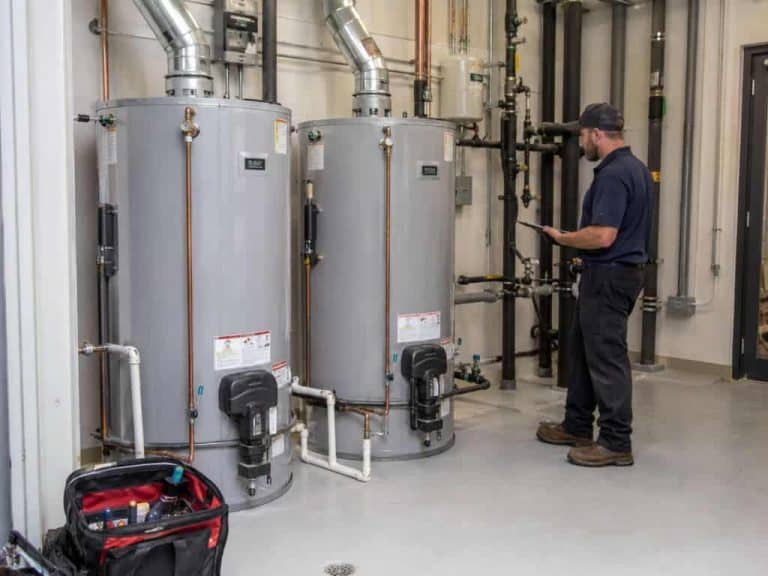
That is why good commercial plumbers and good general contractors tend to be conservative about compliance. Not timid, just realistic. They know the easiest day to solve a permit issue is before the work begins.
Renovation work can be trickier than new construction
People often assume new construction is the hard part and renovations are simpler. In my experience, commercial renovations can be more delicate because they combine old conditions with new requirements.
An older building might have limited access, unknown tie-in conditions, or previous alterations that are hard to verify until walls or slabs are opened. A commercial tenant finish project may start with a narrow plumbing scope and then expand as hidden conditions come to light. If the work is permitted, those discoveries are not just construction surprises. They can affect whether the original approach still fits the city’s code and permit path.
This is one reason experienced plumbers hesitate to make grand promises after a five-minute walk-through. In commercial settings, caution is professionalism. It does not mean the job is impossible. It means the team respects the fact that code compliance is based on actual conditions, not assumptions.
Sewer, cleaning, and maintenance work still live in a regulated environment
Boerne-area plumbing providers publicly advertise services like sewer line cleaning, hydro jetting, snaking, leak detection and repair, water heater installation or replacement, and commercial plumbing service. Those are common real-world needs. Commercial buildings deal with clogged lines, worn water heaters, leaks, and drain problems just like any other property, often at a larger scale and with more urgency.
What owners sometimes miss is that maintenance-type work and project-type work can blur together fast. A recurring drain issue may start as cleaning and end with a larger repair discussion. A leak investigation may uncover a piping problem with broader implications. A water heater replacement may involve more coordination than expected once the space, utility connections, or related systems are considered.
That does not mean every service call becomes a major permit event. It means commercial clients should resist the urge to label something “minor” before the plumbing contractor and the city’s requirements have been properly considered.
Water usage, leaks, and why documentation matters
One Boerne policy that deserves more attention from commercial property owners is the city’s one-time water-usage adjustment for a plumbing leak. Under the city’s utility rules, a customer may qualify if the consumption is at least 50 percent above the customer’s yearly average. The customer must provide a repair bill or parts receipts, and sewer charges may also be adjusted in certain December through March leak plumbers installation services cases.
That policy says a lot about why documentation matters.
For commercial properties, a leak can do damage in three directions at once. It can affect operations, repair costs, and utility bills. If the property qualifies for the city’s adjustment process, the paperwork becomes valuable. A clean repair record is not just nice to have. It can support a financial remedy.
This is one area where organized commercial management has a real advantage. The property owner or manager who keeps the plumber’s invoice, tracks water usage, and acts quickly is in a much stronger position than the one trying to reconstruct events months later. Even when a leak does not turn into a permit-heavy project, the official utility process still rewards clear documentation.
What owners and managers should ask before work starts
Commercial clients do not need to become code experts, but they do need to ask better questions. The right questions at the start can prevent a lot of friction later.
A useful short checklist looks like this:
- Does this scope require a permit in Boerne?
- Is the contractor properly registered for work in city limits?
- Who is the Responsible Master Plumber for the contracted work?
- Are there related mechanical, fuel gas, or energy permits involved?
- What inspections or documents will be needed for closeout?
That is not a lawyer’s checklist. It is a practical one. The goal is not to interrogate the contractor. The goal is to make sure the project starts on solid ground.
Clients are often surprised by how much smoother communication becomes once those basics are out in the open. Good contractors usually appreciate the questions because they signal that the owner understands commercial work is structured, not improvised.
Speed matters, but clean execution matters more
Every commercial client wants speed. That is normal. Vacancy costs money. Tenant downtime costs money. Delayed openings cost money. But the fastest-looking path can be the slowest path if it ignores Boerne’s permitting and code-compliance requirements.
A better way to think about it is this: real speed in commercial plumbing comes from clean execution. Clean execution means the right permit path, the right registration, the right licensed structure, and work that matches the adopted code from the start. It also means knowing when a job touches adjacent regulated systems and planning accordingly.
The irony is that compliance usually feels slow only at the beginning. Noncompliance feels fast at first, then painfully slow when the project has to backtrack.
Good commercial plumbing work is administrative as well as technical
That may not be the glamorous side of the trade, but it is the truth. In Boerne, strong commercial plumbing performance includes paperwork, coordination, scheduling, utility awareness, and code knowledge, not just technical skill with piping and fixtures.
The city’s permitting and code-compliance framework makes that plain. Commercial work takes place inside an official process. The 2021 International Plumbing Code sets the technical baseline. Contractor registration is required in city limits. Texas licensing rules define who can perform work and who can contract it to the public. Sewer-related work exists within a city environment that maintains formal standards. Even leak repairs can intersect with utility rules and billing adjustments.
For owners, tenants, and managers, that means a successful project is rarely just about hiring the lowest bidder or the first company that can show up. It is about hiring a contractor who can navigate the whole job, from legal eligibility to final inspection record, without creating risk that surfaces later.
Boerne commercial projects do not need drama. They need clarity. When permits and code compliance are handled early and handled well, the plumbing work tends to move the way it should, steadily, predictably, and with far fewer expensive surprises.